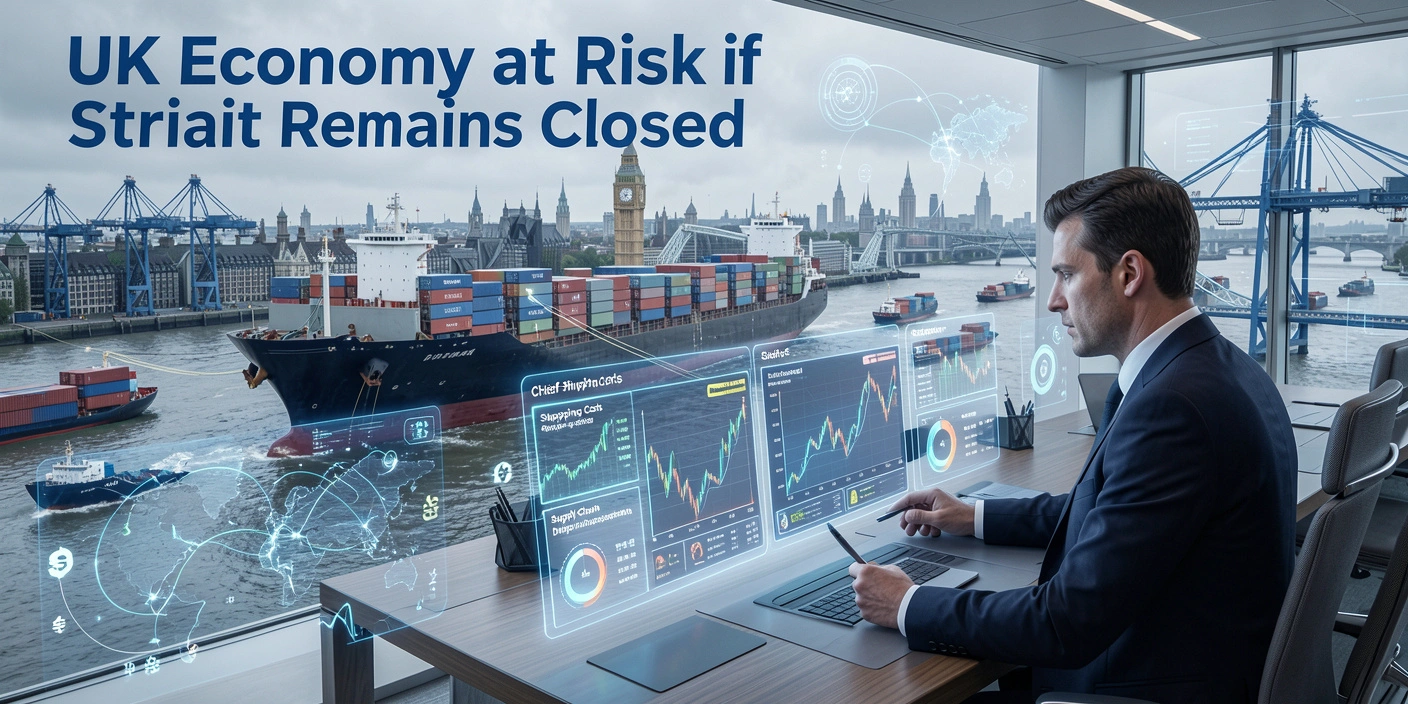
The possibility of a prolonged disruption to a major global shipping route has raised fresh concerns among businesses and policymakers. The UK Economy at Risk if Strait Remains Closed is no longer viewed as a distant scenario but as a challenge that could influence trade, investment, and financial stability. Since the United Kingdom depends heavily on international commerce, any interruption to maritime transport has the potential to ripple across industries.
Furthermore, global markets have become increasingly interconnected. Consequently, disruptions in one region often influence supply chains, commodity prices, and business confidence in another. Therefore, finance leaders are paying close attention to geopolitical developments while preparing organizations for greater uncertainty.
Why the Strait Matters to Business
A significant portion of global energy supplies and commercial goods passes through key international waterways. If these routes remain inaccessible for an extended period, transportation becomes slower and more expensive. As a result, businesses importing raw materials or exporting finished products could experience higher operating costs and reduced efficiency.
Moreover, shipping delays may increase inventory shortages while extending production timelines. In turn, organizations may need to revise budgets, reassess contracts, and adjust financial forecasts. These developments continue to shape ongoing Finance industry updates, encouraging companies to strengthen long term planning.
Financial Pressure Across Multiple Industries
If shipping disruptions continue, several industries may experience rising expenses. Manufacturing companies could face increased production costs, retailers may struggle with inventory availability, and energy intensive sectors might encounter higher fuel prices. Likewise, businesses relying on imported technology components could see project timelines extended.
Meanwhile, investors often respond cautiously during periods of uncertainty. Consequently, businesses seeking funding may face additional financial scrutiny, making strategic capital allocation more important than ever. For chief financial officers, balancing cost management with future investment becomes an essential responsibility.
The Expanding Role of Financial Leadership
Economic uncertainty places finance executives at the center of organizational decision making. Rather than focusing only on budgeting, modern CFOs are expected to guide strategic planning, evaluate financial risks, and support sustainable growth.
Additionally, effective leaders collaborate with operational teams to improve forecasting accuracy and identify opportunities for greater efficiency. As market conditions evolve, financial leadership increasingly depends on agility, clear communication, and informed decision making.
These responsibilities continue to align with emerging Technology insights, where advanced analytics help finance teams respond more quickly to changing business conditions.
Technology Supports Better Decision Making
Digital transformation has significantly improved financial planning capabilities. Artificial intelligence, predictive analytics, and cloud based financial systems provide real time visibility into cash flow, supply chain performance, and operational costs.
Consequently, finance leaders can evaluate multiple business scenarios before making investment decisions. Instead of reacting after disruptions occur, organizations can prepare alternative strategies that reduce financial exposure. These innovations continue to influence both corporate planning and broader IT industry news, demonstrating how technology strengthens business resilience.
Workforce and Commercial Planning
Economic pressure extends beyond finance departments. Organizations may review hiring plans, operational priorities, and investment strategies while monitoring market conditions. Nevertheless, companies that continue investing in skilled professionals often remain better positioned for future growth.
Current HR trends and insights indicate that businesses increasingly value employees who combine technical expertise with adaptability and strategic thinking. At the same time, commercial teams continue refining customer engagement approaches based on changing economic conditions.
This environment also encourages businesses to revisit Sales strategies and research, ensuring revenue generation remains aligned with customer expectations despite market uncertainty.
Market Confidence and Business Growth
Although external disruptions create challenges, they also encourage organizations to strengthen operational resilience. Companies that diversify suppliers, improve financial controls, and expand digital capabilities often recover more effectively from unexpected events.
Similarly, stronger customer communication and flexible pricing strategies can help businesses maintain market confidence. Ongoing Marketing trends analysis also shows that organizations communicating transparency and reliability tend to build stronger relationships during uncertain periods.
Therefore, successful businesses focus not only on immediate cost control but also on preserving long term competitiveness.
Practical Insights for Finance Leaders
Preparation remains one of the strongest financial strategies during periods of global uncertainty. CFOs should regularly review cash flow forecasts, diversify supplier relationships, strengthen scenario planning, and invest in technologies that improve financial visibility. Organizations that combine disciplined financial management with strategic decision making are more likely to navigate disruption while protecting profitability and supporting sustainable growth. Connect with CFOInfoPro for trusted financial expertise, practical business intelligence, and forward looking insights that help organizations make confident decisions in a changing global economy.