
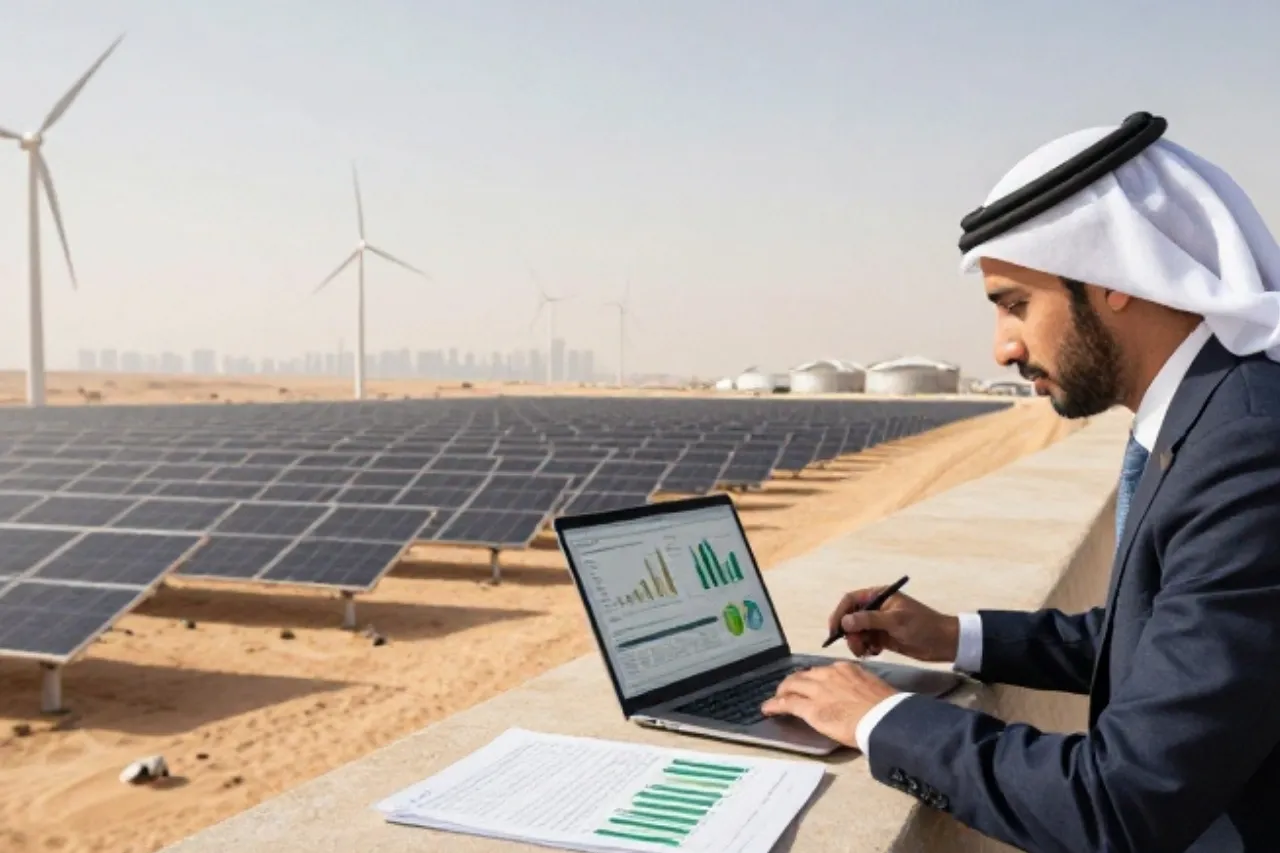

Saudi Arabia is accelerating its transition towards a more diversified and sustainable economy. Through Vision 2030 and its renewable energy initiatives, the Kingdom is creating significant opportunities for investment in solar, wind and other clean energy technologies. As these projects become larger and more complex, investors and financial leaders need reliable methods to evaluate their commercial viability.
Financial modeling plays an important role in this transformation. It helps businesses estimate project costs, forecast revenues, assess investment risks and understand long term returns before committing substantial capital. Moreover, accurate financial projections allow CFOs, investors and project developers to make informed decisions in an evolving energy market.
For organisations entering this sector, building reliable financial models is becoming an essential part of successful renewable energy investment planning.
Saudi Arabia has considerable potential for renewable energy development, particularly because of its strong solar resources and suitable wind locations. The government’s National Renewable Energy Program is supporting the expansion of clean energy capacity through competitive procurement, private sector participation and large scale development projects.
Furthermore, the country’s commitment to economic diversification is encouraging domestic and international investors to explore opportunities across the energy value chain.
These developments create a need for detailed financial assessments. Solar farms, wind installations and energy storage facilities involve different construction costs, operating requirements and revenue structures. Therefore, investors must evaluate each project individually rather than relying on general industry assumptions.
Renewable energy developments often require substantial initial investment, while financial returns are generated over several years. This makes accurate forecasting particularly important.
A well structured financial model provides a clear picture of expected capital expenditure, operating expenses, financing costs, revenue and project profitability. It also helps investors understand how changes in electricity prices, construction timelines and operating performance could influence returns.
For CFOs, this information supports better capital allocation and investment planning. Additionally, financial projections help lenders assess repayment capacity and determine whether a project can maintain sufficient cash flow throughout its operating life.
Consequently, financial modeling becomes more than a budgeting exercise. It serves as a strategic decision making tool throughout the investment lifecycle.
One of the first stages of project evaluation involves estimating the total investment required to develop and operate a renewable energy facility.
Capital expenditure generally includes land preparation, solar panels or wind turbines, inverters, grid connections, installation, engineering and construction. Energy storage systems can introduce additional costs, depending on the project’s technical design.
Operating expenses must also be considered. These may include equipment maintenance, insurance, staffing, land leasing, monitoring systems and component replacement.
In Saudi Arabia, developers should account for local construction conditions, equipment sourcing, logistics and applicable regulatory requirements. Accurate cost assumptions help prevent underestimating the financial resources required to complete a project.
Revenue forecasting is another essential component of investment evaluation. Renewable energy projects may generate income through long term Power Purchase Agreements (PPAs), electricity sales or other permitted commercial arrangements.
A financial model should reflect the agreed electricity tariff, contracted generation capacity, expected energy production and payment conditions. It should also account for operational factors such as equipment degradation, maintenance downtime and seasonal generation variations.
For instance, a solar project may experience changes in electricity output depending on weather conditions, dust accumulation and equipment efficiency. Similarly, wind projects require location specific assessments of wind availability.
Therefore, realistic production estimates are essential for developing dependable revenue projections and assessing long term profitability.
Renewable energy investments involve several financial and operational uncertainties. Construction delays, interest rate fluctuations, currency movements, regulatory changes and equipment costs can all affect project performance.
Scenario analysis allows investors to examine how different market conditions could influence financial outcomes. For example, CFOs can compare expected returns under optimistic, conservative and adverse operating assumptions.
Key financial indicators such as Net Present Value, Internal Rate of Return, Debt Service Coverage Ratio and payback period provide additional insights into project viability.
Moreover, sensitivity analysis helps identify which assumptions have the greatest influence on profitability. This allows decision makers to focus on the risks that require closer monitoring.
Technology is changing how renewable energy projects are evaluated and managed. Advanced analytics, cloud based financial platforms and artificial intelligence can improve forecasting accuracy while reducing manual reporting.
These technology insights are particularly relevant as project developers manage larger volumes of operational and financial information. Integration between energy monitoring platforms and financial systems can help CFOs compare actual performance with projected results.
Meanwhile, IT industry news continues to highlight developments in predictive analytics, automation and digital infrastructure that can support more effective financial planning.
As a result, businesses investing in modern financial technology can improve reporting visibility and respond more quickly when project assumptions change.
Environmental, Social and Governance considerations are becoming increasingly important in renewable energy financing. Investors are examining not only financial returns but also environmental performance, governance standards and broader economic contributions.
Financial models can incorporate relevant sustainability assumptions, including emissions reductions, energy efficiency improvements and environmental compliance costs.
In addition, workforce requirements and local employment considerations can influence project planning. HR trends and insights may therefore provide useful context when assessing recruitment, skills development and operational staffing requirements.
Similarly, sales strategies and research and marketing trends analysis can help developers understand customer demand, commercial positioning and opportunities within the expanding clean energy ecosystem.
CFOs and investment teams should regularly update financial assumptions rather than treating an investment model as a one time document. Construction costs, financing conditions, generation estimates and contractual arrangements can change as projects progress.
It is equally important to validate assumptions using technical feasibility studies, reliable market information and independent cost assessments. Financial teams should also coordinate with engineering, procurement and legal specialists before finalising investment decisions.
Ultimately, the strongest financial models connect technical performance with commercial realities. By combining realistic forecasting, disciplined risk assessment and appropriate technology, businesses can evaluate opportunities more confidently and support Saudi Arabia’s evolving renewable energy landscape.
Looking to strengthen your renewable energy investment strategy and financial planning? Connect with CFOInfoPro for valuable finance industry updates, expert perspectives and insights that support smarter investment decisions and sustainable business growth.







CFOInfoPro helps decision makers in finance to make the right decisions by providing essential content.
Contact us:info@cfoinfopro.com
© 2026 CFOinfopro. All rights reserved.