Latest News:


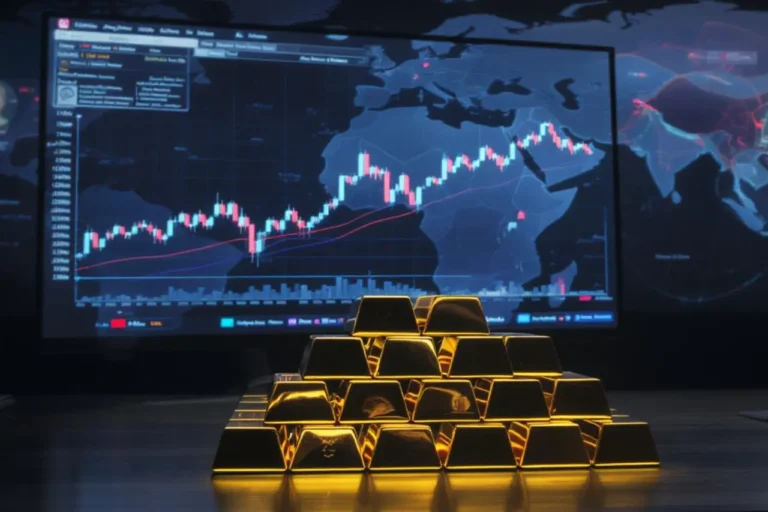
Gold has historically reacted strongly to geopolitical tension. Investors often rush toward safe assets when uncertainty rises across global markets. Because of this long standing behavior many analysts expected gold to surge when tensions connected to the Iran conflict intensified. Yet the gold price stuck despite Iran conflict narrative has puzzled market watchers.
Instead of climbing rapidly the metal has remained relatively stable. This unexpected calm has sparked debate among economists, financial analysts, and corporate strategists who track finance industry updates and global risk indicators. For decision makers in businesses and financial institutions the question is not only why gold has remained steady but also what might trigger the next major move.
Understanding the factors shaping the current market environment provides valuable context for executives, investors, and analysts following broader economic signals.
Financial markets rarely react in isolation. Gold is influenced by several interconnected forces including currency movements, interest rate expectations, and investor sentiment.
One major factor explaining the gold price stuck despite Iran conflict scenario is the strength of the United States dollar. When the dollar strengthens many investors prefer holding cash or dollar based assets instead of gold. As a result the traditional flight toward precious metals has been partly redirected toward currency markets.
Another influence comes from government bond yields. Higher yields on treasury securities often reduce the appeal of gold because the metal does not produce interest. When investors see opportunities for stable returns elsewhere they may temporarily hold back from increasing gold exposure even during periods of geopolitical uncertainty.
These combined forces demonstrate that global markets respond to a wider set of signals than conflict headlines alone.
Market psychology plays a powerful role in determining price direction. In recent months investors have been closely watching inflation indicators and central bank policy decisions. Expectations surrounding interest rate changes continue to dominate finance industry updates across the world.
If traders believe interest rates will remain elevated they may hold a cautious position toward gold. On the other hand signs of future rate cuts could quickly change the sentiment and increase demand for the metal.
Corporate analysts who track marketing trends analysis and sales strategies and research across industries also recognize the broader impact of these financial signals. Commodity prices influence manufacturing costs, investment flows, and even consumer confidence in certain sectors.
This interconnected system explains why gold sometimes remains stable even when geopolitical risks appear significant.
Another reason behind the muted reaction lies in the evolution of modern financial markets. Advanced trading platforms and algorithmic analysis allow investors to process global news faster than ever before. Technology insights show that automated trading systems evaluate hundreds of economic variables simultaneously before making investment decisions.
Because of this rapid analysis markets may adjust to geopolitical developments more gradually instead of reacting instantly. Large institutional investors increasingly rely on predictive data models that assess risk through long term economic patterns rather than short term headlines.
The influence of technology has also reshaped how investors access information. IT industry news and digital market intelligence tools provide continuous updates that shape trading behavior in real time. This greater transparency can reduce sudden panic driven market movements that once pushed gold prices sharply upward.
For corporate leaders the gold market is more than a commodity chart. It acts as a barometer of global risk sentiment. CFOs, financial planners, and strategic leaders often analyze gold alongside currency fluctuations and equity performance.
Companies that follow HR trends and insights or broader workforce planning indicators also consider how global economic shifts influence hiring decisions and compensation strategies. When markets signal stability businesses may maintain expansion plans. However if gold begins to rise sharply it often reflects growing uncertainty that could influence corporate risk management.
Therefore the gold price stuck despite Iran conflict situation is being monitored carefully by financial executives who rely on market signals to guide long term planning.
Even though gold has remained relatively stable the situation may change quickly depending on several developments across global markets. Changes in monetary policy could become a powerful catalyst. If central banks signal rate reductions investors may turn toward gold as a hedge against inflation and currency volatility.
Another potential trigger involves escalation in geopolitical tensions beyond the current scope. A broader regional impact could increase safe haven demand. However markets tend to wait for concrete developments rather than reacting purely to speculation.
Economic growth trends will also play a role. Slower global growth combined with persistent inflation could renew interest in precious metals. Analysts following finance industry updates continue to watch these indicators closely.
Meanwhile technology insights suggest that institutional investors increasingly rely on long term macroeconomic modeling. If those models begin projecting economic instability gold demand could accelerate rapidly.
Executives and investors should pay attention to signals that extend beyond immediate headlines. Currency movements, inflation trends, and central bank messaging remain among the most influential factors shaping commodity markets.
At the same time broader business indicators such as IT industry news, HR trends and insights, and marketing trends analysis offer context about the health of global industries. Strong corporate growth often reduces the urgency for safe haven assets, while economic slowdown tends to increase defensive investment strategies.
Sales strategies and research across industries can also reflect shifting consumer confidence. These trends collectively form a complex network of signals that influence the future direction of gold prices.
Monitoring these interconnected indicators allows businesses to anticipate potential shifts in global financial sentiment before they appear clearly in commodity charts.
Periods when gold behaves unexpectedly often provide the most valuable insights for decision makers. Stability during geopolitical tension suggests that financial markets are weighing broader economic signals with greater sophistication than in the past.
For investors this means diversification and data driven decision making are more important than reacting to headlines alone. For corporate leaders the lesson lies in understanding how interconnected economic signals shape financial risk and opportunity across industries.
Organizations that integrate financial analysis with technology insights and strategic market research often develop stronger resilience during uncertain periods.
CFOInfoPro helps business leaders interpret complex financial developments with clarity and confidence. Connect with our experts today to explore deeper insights that support smarter financial strategy and sustainable growth.
Source : cnbc.com
CFOInfoPro helps decision makers in finance to make the right decisions by providing essential content.
© 2026 CFOinfopro. All rights reserved.