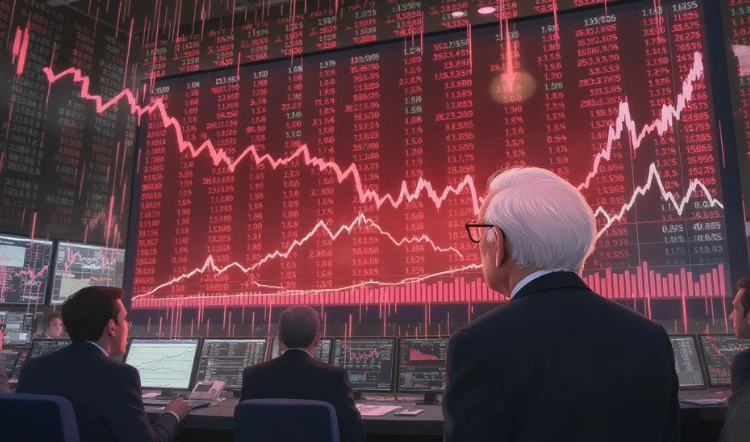

The financial world often pays close attention to the words of Warren Buffett. Known for his long term investing philosophy and disciplined approach to markets, Buffett rarely delivers dramatic warnings. That is precisely why recent remarks from the legendary investor have sparked widespread discussion across financial circles. Many analysts are now asking a critical question that investors cannot ignore. Warren Buffett signals danger is a market crash coming.
Although markets have experienced remarkable growth in recent years, uncertainty continues to linger beneath the surface. Inflation pressures, shifting interest rates, and global economic tension have created a complex environment. As a result, Buffett’s cautious tone has encouraged investors and financial leaders to reassess their expectations and risk exposure.
At the same time, conversations around economic stability are expanding beyond traditional finance discussions. Business leaders now connect market signals with broader topics such as technology insights, IT industry news, HR trends and insights, finance industry updates, sales strategies and research, and marketing trends analysis. These interconnected forces shape how modern organizations prepare for potential disruptions.
When financial markets appear confident, seasoned investors often focus on underlying risks. Buffett has built his reputation by observing long term economic patterns rather than short term excitement. Because of this approach, any suggestion that the market environment is becoming fragile draws serious attention.
Many investors believe the current valuation levels across equities may not fully reflect economic uncertainty. Meanwhile, interest rates remain significantly higher than they were during the years of ultra loose monetary policy. Consequently, borrowing costs are rising for businesses and consumers alike. Such conditions can gradually place pressure on corporate earnings and market sentiment.
Furthermore, Warren Buffett signals danger is a market crash coming reflects concerns about investor behavior. During extended bull markets, confidence can easily shift into overconfidence. As a result, speculative investment activity often increases while risk awareness declines.
For companies operating in fast moving industries, including those influenced by technology insights and IT industry news, market conditions can quickly influence strategic planning. When financial uncertainty grows, leadership teams must balance growth ambitions with risk management.
A potential market downturn rarely emerges from a single factor. Instead, multiple economic pressures gradually build over time. Rising interest rates remain one of the most significant influences on the current financial environment.
Higher borrowing costs can slow business expansion and reduce consumer spending. Meanwhile, companies that rely on debt financing may experience pressure on profitability. In addition, global economic tensions and supply chain disruptions continue to affect international trade.
Another important consideration involves labor dynamics. HR trends and insights reveal that organizations across industries are adjusting workforce strategies in response to economic shifts. Businesses are prioritizing efficiency and productivity while navigating uncertain growth expectations.
The financial ecosystem is also shaped by ongoing finance industry updates. Regulatory changes, banking sector developments, and evolving investment patterns all influence market confidence. Consequently, when respected voices such as Buffett highlight potential risks, investors begin to reexamine the broader economic landscape.
Financial markets often move through cycles driven by both data and emotion. Optimism fuels expansion phases, while caution typically follows periods of excessive speculation. In this context, the question Warren Buffett signals danger is a market crash coming captures the tension between optimism and caution.
Investor psychology plays a powerful role in determining how markets behave during uncertain periods. When confidence is strong, even warning signals may be overlooked. However, when doubts emerge, sentiment can shift rapidly and create volatility.
Moreover, market sentiment today is heavily influenced by digital information flow. Technology insights and real time financial analysis allow investors to respond quickly to economic news. As a result, market reactions can sometimes be more immediate and intense than in previous decades.
Businesses involved in sales strategies and research often monitor these shifts closely. Consumer confidence and corporate investment decisions frequently reflect broader economic sentiment. Therefore, market uncertainty can influence strategic planning across multiple sectors.
Corporate leaders are increasingly aware that financial markets do not operate in isolation. Instead, economic signals affect nearly every aspect of business operations. From workforce planning to marketing investment decisions, market expectations shape how organizations allocate resources.
Marketing trends analysis reveals that companies are becoming more cautious with advertising budgets during periods of economic uncertainty. At the same time, digital transformation initiatives remain a priority because technological efficiency can help organizations maintain competitiveness even during slower growth cycles.
Additionally, IT industry news shows that technology companies are balancing innovation with profitability. Investors are now focusing more closely on sustainable growth rather than rapid expansion alone. This shift reflects a broader adjustment in market expectations.
Within this environment, the question Warren Buffett signals danger is a market crash coming encourages decision makers to examine risk exposure more carefully. Instead of reacting emotionally to short term market movements, many organizations are strengthening long term strategic planning.
Market forecasts are rarely certain, yet informed preparation can make a significant difference. Investors often analyze indicators such as corporate earnings growth, inflation trends, and central bank policies to assess potential market direction.
Equally important is the ability to evaluate economic signals within a broader business context. Technology insights, finance industry updates, HR trends and insights, and marketing trends analysis collectively shape the modern corporate landscape.
Businesses that integrate financial awareness with operational strategy tend to navigate uncertain environments more effectively. Strategic flexibility, disciplined investment decisions, and strong risk management frameworks often provide stability even when markets become volatile.
Periods of financial uncertainty often encourage investors and business leaders to refine their approach rather than abandon their strategy entirely. Market history consistently shows that volatility creates both risks and opportunities for those who remain informed and disciplined.
Organizations that monitor finance industry updates alongside technology insights can better understand how economic trends influence operational performance. Similarly, leadership teams that evaluate HR trends and insights may uncover ways to strengthen workforce resilience during shifting market conditions.
At the same time, companies that integrate sales strategies and research with marketing trends analysis often maintain stronger customer engagement during economic transitions. By connecting these insights with broader financial awareness, decision makers can develop strategies that balance caution with opportunity.
CFOInfoPro supports forward thinking professionals who seek deeper understanding of evolving economic signals. Reach out to the CFOInfoPro team today to explore expert insights that help your organization stay prepared and confident in an unpredictable financial landscape.
Source : finance.yahoo.com





CFOInfoPro helps decision makers in finance to make the right decisions by providing essential content.
© 2026 CFOinfopro. All rights reserved.