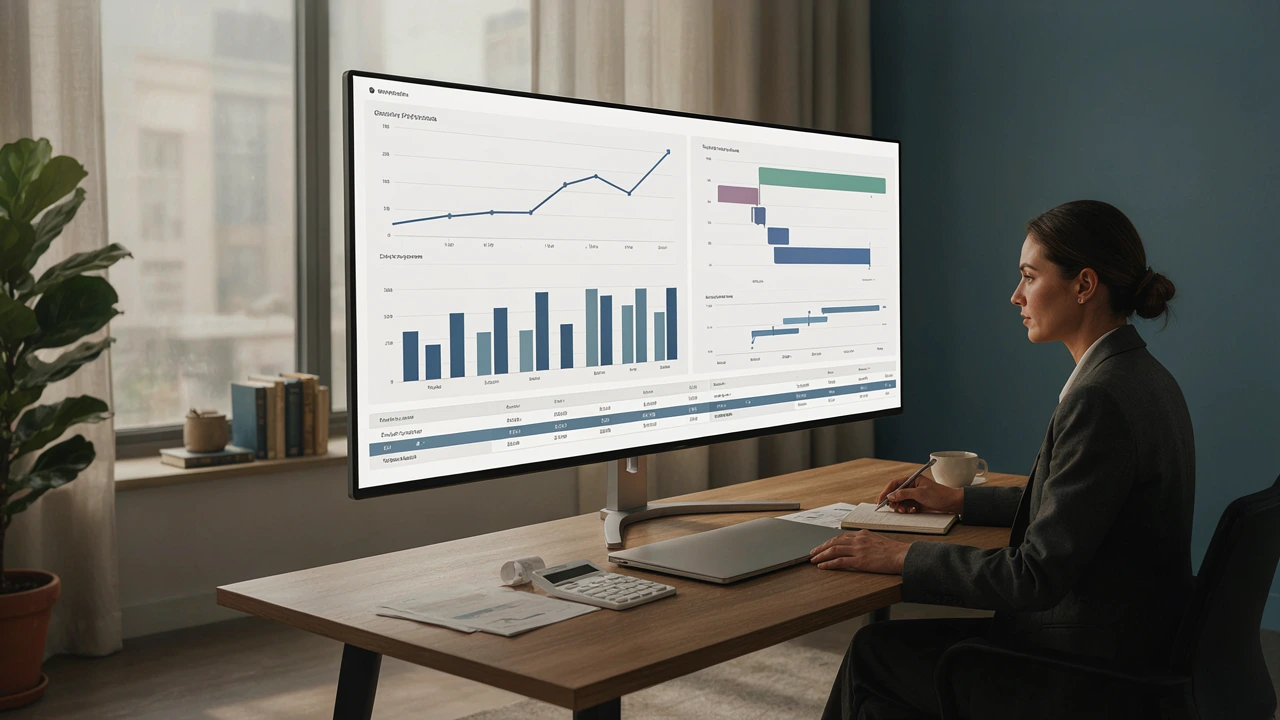
Modern businesses operate in an environment where costs, customer expectations and market conditions can change quickly. Therefore, accountants need more than accurate historical records to support financial decision making. They also need reliable methods for anticipating future performance.
Budgeting and Forecasting provide a structured way to connect financial goals with expected business activity. While a budget establishes financial expectations for a specific period, a forecast helps organizations understand how those expectations may change as new information becomes available.
Consequently, accountants play an important role in turning financial data into meaningful business intelligence.
Why Accurate Budgets Matter
A well prepared budget gives management a clearer picture of expected revenue, expenses, cash requirements and profitability. Moreover, it creates a financial framework that helps departments understand how their decisions can affect overall performance.
For accountants, the process involves reviewing historical results, understanding current business conditions and considering future objectives. At the same time, accountants must remain flexible because unexpected expenses, changing demand and economic developments can quickly influence financial plans.
As a result, an effective budget should provide direction without becoming so rigid that it prevents businesses from responding to change.
Forecasting Supports Better Decisions
Forecasting takes financial planning a step further by examining what could happen based on current information. Accountants can use sales performance, operating costs, cash flow patterns and market conditions to develop realistic expectations for future periods.
Furthermore, regular forecasting allows businesses to identify potential financial challenges before they become serious problems. For example, declining sales may indicate that revenue expectations need to be revised, while increasing operating costs may require adjustments to spending plans.
In addition, updated forecasts help management make informed decisions about hiring, investments, expansion and resource allocation.
Using Technology to Improve Financial Planning
Technology has significantly changed how accounting teams manage financial information. Cloud accounting platforms, automated reporting systems and data analytics tools can reduce manual work while improving access to current information.
These developments also connect financial planning with broader Technology insights. Consequently, accountants can spend less time gathering information and more time interpreting results.
At the same time, professionals should monitor IT industry news because emerging technologies can influence accounting processes, cybersecurity requirements and financial reporting practices. Automation and artificial intelligence are increasingly becoming part of modern finance functions, making digital skills increasingly valuable for accounting professionals.
Financial planning becomes more useful when accountants understand what is happening across the wider organization. Revenue expectations, staffing requirements, marketing expenditure and operational costs are closely connected.
For instance, HR trends and insights can help accountants understand how workforce changes may influence salary expenses and future hiring budgets. Similarly, Sales strategies and research can provide valuable context when estimating future revenue.
Meanwhile, Marketing trends analysis can help explain changes in customer acquisition costs and campaign spending. Therefore, accountants should collaborate with different departments rather than treating financial planning as an isolated accounting activity.
Responding to Finance Industry Updates
Economic conditions and regulatory developments can influence financial expectations. Interest rates, inflation, taxation changes and changing customer behavior may all affect business performance.
Because of this, accountants should regularly follow Finance industry updates and evaluate whether external developments require changes to existing assumptions. A forecast based entirely on historical data may become less reliable when market conditions change significantly.
Moreover, scenario planning can help businesses prepare for different possible outcomes without relying on a single financial assumption.
Making Forecasts More Useful
The value of a forecast depends heavily on the quality of its underlying information. Accountants should therefore review assumptions regularly and compare projected results with actual performance.
When differences appear, the objective should not simply be to identify an error. Instead, accountants should investigate why the difference occurred. Perhaps customer demand changed, operating expenses increased or a strategic decision produced unexpected results.
Over time, this process creates stronger forecasting practices because each reporting cycle provides new information that can improve future estimates.
Building a Forward Looking Accounting Function
The accounting profession is becoming increasingly analytical. Rather than focusing exclusively on recording transactions, finance professionals are expected to explain performance and support strategic decisions.
Therefore, strong budgeting and forecasting skills can help accountants become valuable business partners. Combining financial expertise with Technology insights, Finance industry updates and broader business knowledge allows professionals to contribute beyond traditional reporting responsibilities.
Ultimately, the most effective approach is continuous. Review the numbers, challenge assumptions, understand operational changes and update expectations as new evidence emerges.
Practical Insights for Accountants
Accountants can strengthen financial planning by reviewing budgets regularly instead of waiting for the end of the financial year. Comparing actual performance with expectations can reveal emerging trends early. Furthermore, involving department leaders in financial discussions can improve the quality of assumptions and encourage greater accountability.
It is also useful to maintain clear documentation of forecasting assumptions. This makes it easier to understand why expectations changed and helps future forecasts become more accurate.
Most importantly, financial planning should support business decisions rather than simply produce financial reports. When accountants combine reliable data with business context, they can help organizations respond faster, manage resources more effectively and plan with greater confidence.
For more professional perspectives on finance, accounting and business performance, reach out to CFOInfoPro and explore practical insights designed for modern finance professionals.
Stay informed with CFOInfoPro to strengthen financial decision making and build smarter strategies for sustainable business growth.